Bent Bolts
Why the Bend Radius Genuinely Decides the Strength
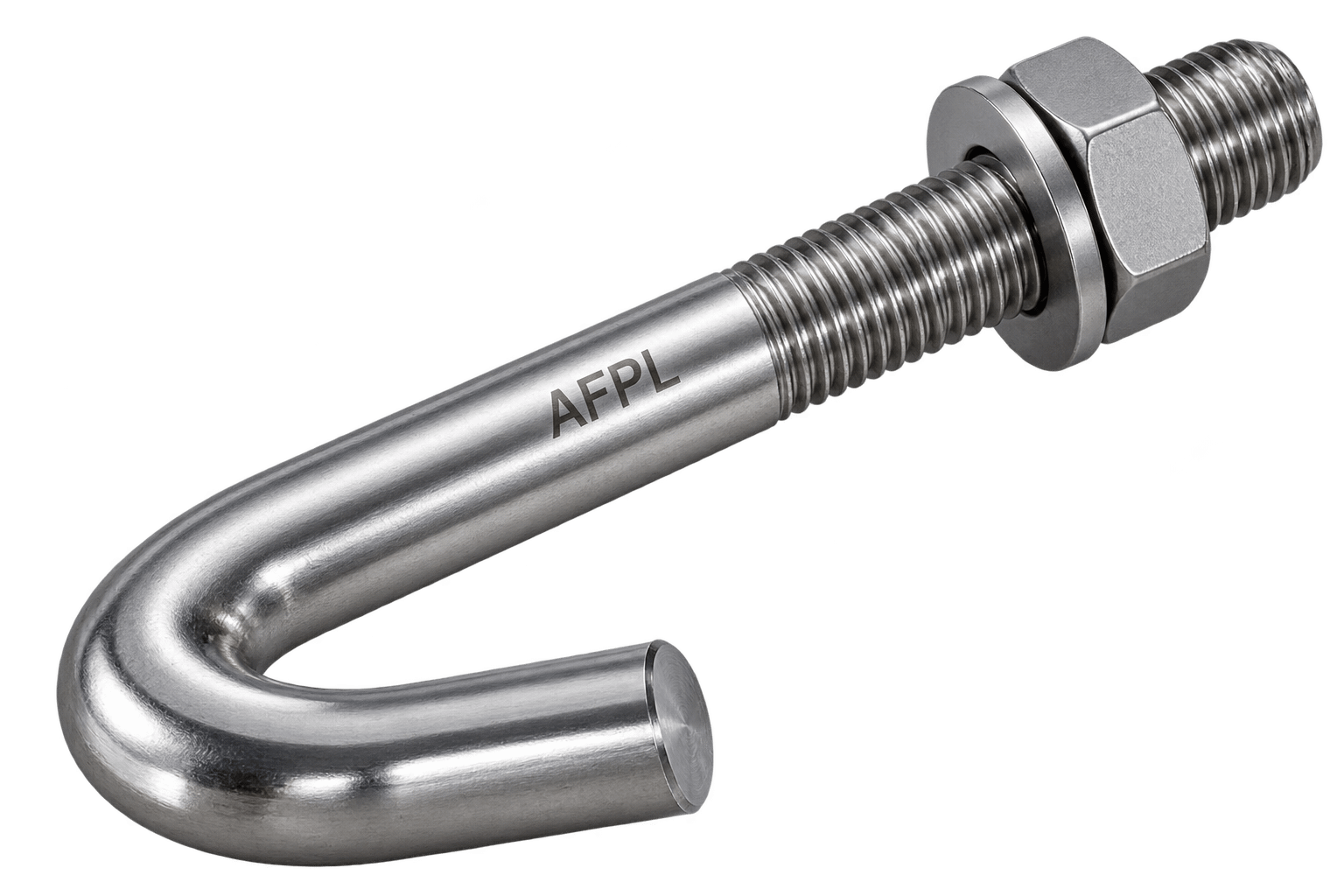
A bent bolt’s defining feature is the shank bend itself — and how that bend is formed, cold-bent before or after heat treatment, or hot-bent, is a genuine manufacturing-process decision distinct from a straight bolt’s typically uniform quench-and-temper cycle.
Here is why this matters. Bending a bolt introduces a genuine stress concentration and localized cold work right at the bend radius. The sharpness of that bend radius directly controls how much this localized stress concentration reduces fatigue life and load capacity at the bend, compared to the bolt’s straight-shank strength. Additionally, for higher-strength or higher-carbon grades, bending after full hardening genuinely risks cracking right at the bend due to reduced ductility in the hardened condition. This is why higher-strength bent bolts are often bent before final heat treatment, bend first, then harden, or bent hot, rather than cold-bent after hardening. The bend radius and the bending sequence relative to heat treatment are the genuine process decisions that determine whether a bent bolt reliably retains its intended strength at the bend.
A genuine, honest trade-off is worth stating plainly. Because bending before heat treatment can introduce some geometric distortion during the subsequent quench, the bend angle can shift slightly during hardening, and because a genuinely large, gradual bend radius takes up more physical space and material than a tight bend, buyers specifying a bent bolt for a tight-clearance application must balance the structural benefit of a larger bend radius against genuine space constraints. A bend radius that’s structurally ideal may not physically fit the application, and buyers should confirm both their load or fatigue requirement and their actual space constraint before finalizing bend radius.
Akbar Fasteners Pvt. Ltd. exports to over 50 countries, and our bent bolt range is manufactured and verified for bend geometry and mechanical property compliance under our ISO 9001:2015 quality system.
A Note on Confirming Load/Fatigue Requirement & Space Constraint
Please confirm your load or fatigue requirement alongside your actual space constraint when requesting a quote — the structurally ideal bend radius and your available clearance need to be balanced together.
Where This Product Genuinely Applies
Genuine Bend Radius Engineering
We size bend radius genuinely against your load and fatigue requirement.
Bend-Before-Hardening Guidance
We advise honestly on process sequence for high-strength grades.
Space Constraint Confirmation
We confirm your clearance genuinely fits the required bend radius.
Verified Dimensions & Mechanicals
Batch testing confirms genuine bend geometry and tensile compliance for every lot.
Gradual vs Sharp Bend Radius — Quick Reference
Confirming whether your application genuinely prioritizes maximum fatigue resistance, or a tight clearance genuinely forces a sharper bend. This table is the quick reference we use with buyers before quoting.
| Aspect | Gradual Bend Radius | Sharp Bend Radius |
|---|---|---|
| Stress Concentration | Genuinely spread over more material | Genuinely concentrated at one point |
| Fatigue Life at Bend | Genuinely higher | Genuinely lower |
| Space Required | Genuinely more | Genuinely more compact |
Bent Bolt Specification Details
Grades We Supply
- Carbon Steel A36, F1554 Gr 36/55
- Stainless Steel A2-70, A4-80
- Alloy Steel Available on Request
- Bend Shape L-Bolt, J-Bolt, U-Bolt, Custom
What We Need
- Load/Fatigue Requirement Required
- Available Clearance/Space Required
- Bolt Grade/Strength Class Confirm on Enquiry
- Order Quantity & Form Per Order
Quality Practice
- Bend Geometry Dimensional Check Every Lot
- Tensile/Proof Load Testing Every Lot
- Crack/Dye Penetrant Testing at Bend Available on Request
- NABL Testing Available on Request
Application Areas
Wherever a bolt genuinely needs a formed bend that retains strength at the bend under the application’s actual loading.
Foundation & Base Plate Anchoring
for reliable long-term embedment load
Pipe Supports & U-Bolt Clamps
for sustained vibration exposure
Bracket & Structural Hanger Fastening
to available mounting clearance
General Formed-Bolt Fastening Needs
a reliable bend retains strength genuinely at the bend
Standard Export Documentation
Prepared as standard practice for every bent bolt shipment.
Mill Test Certificate (MTC)
Material composition and mechanical property verification for every heat.
Bend Geometry Report
Confirms genuine bend radius and angle compliance to specification.
Certificate of Conformance
Confirms the shipment matches the purchase order specification in full.
Certificate of Origin (COO)
Confirms India as country of manufacture for destination customs purposes.
NABL Accredited Test Reports
Independent mechanical and dimensional testing available on request.
Commercial Invoice & Packing List
Itemized value, Incoterm, and detailed carton/weight breakdown for customs clearance.
Internationally Recognised Standards Coverage
Related Products & Materials
Anchor Bolts
Our concrete-embedded bolt range, for genuine breakout-cone pullout resistance.
View Anchor Bolts →Allen Bolts
Our internal hex bolt range, for compact, high-torque steel-to-steel assembly instead.
View Allen Bolts →Hex Nuts
Our standard nut range, commonly paired with bent bolts in bracket and pipe support assembly.
View Hex Nuts →Stainless Steel Fasteners Manufacturer India
Our broader manufacturing capability across all major carbon, alloy, and stainless grades.
View SS Manufacturer Guide →Tell Us Your
Load Requirement & Space Constraint
Share your load or fatigue requirement and available clearance — we’ll confirm the correct bend radius and quote with full documentation. Akbar Fasteners Pvt. Ltd. responds within 24 hours.
Sales: +91 724 0000 733 · Support: +91 800 9315 333 · sales@akbarfasteners.in