Chemical / Epoxy Anchors
Why a Properly Set Rod Genuinely Isn’t Proof of Bond Strength
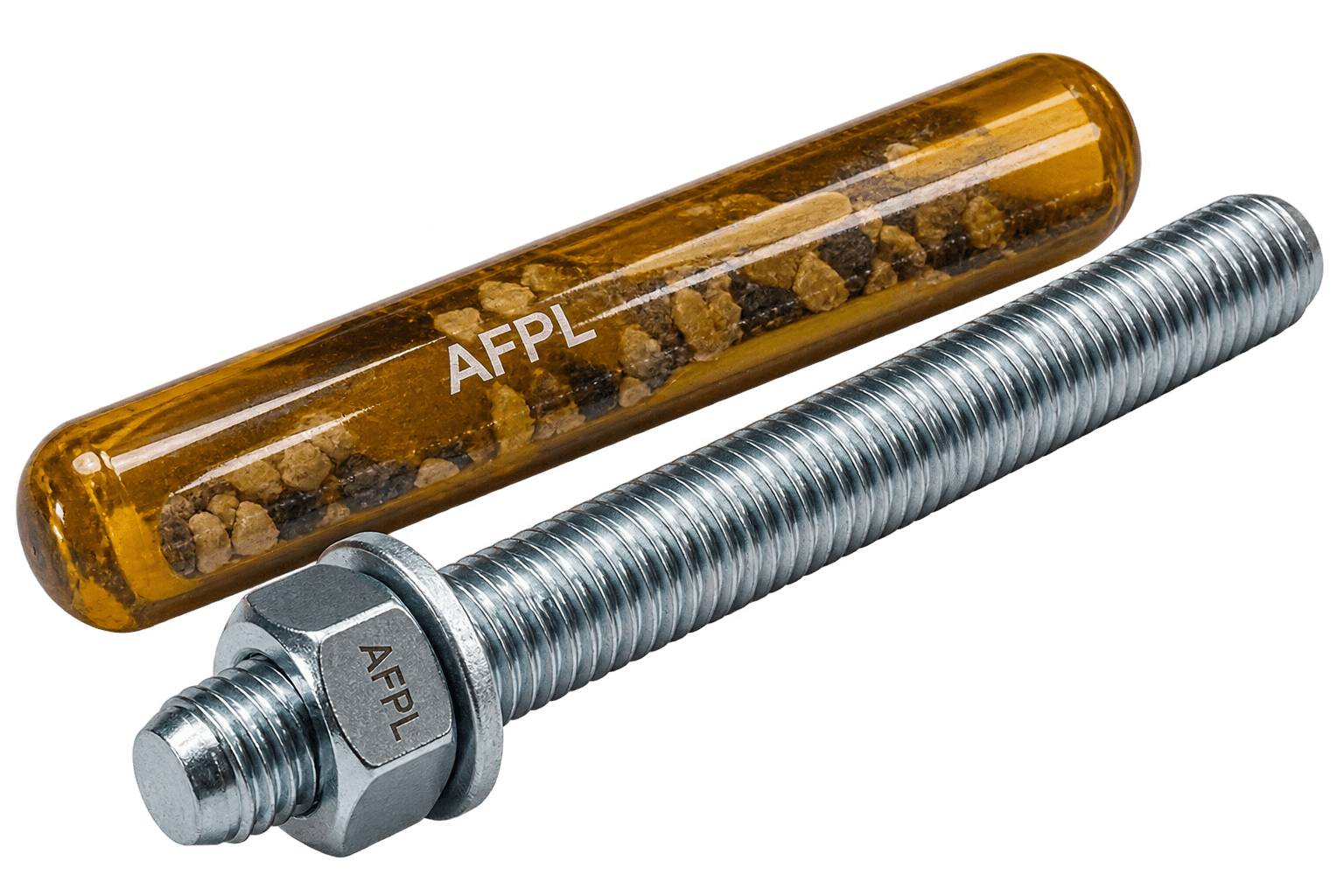
A chemical (epoxy) anchor’s holding capacity comes genuinely from adhesive bond strength between an injected resin, the rod, and the surrounding hole wall, not from mechanical expansion or bearing the way a wedge, sleeve, or headed anchor bolt works. Because there’s genuinely no outward expansion force involved, chemical anchors can be installed much closer to edges and to neighboring anchors without the breakout risk that governs mechanical anchors.
Here is why this matters. Because the entire holding capacity depends genuinely on the resin achieving full, uniform bond contact with the hole wall along the embedment length, and because resin cannot bond properly to a hole wall coated in drilling dust rather than exposed concrete, the anchor’s real capacity depends critically and genuinely on the hole being cleaned exactly per the resin manufacturer’s specified procedure before the resin is injected.
A genuine, honest limitation is worth stating plainly. Because incomplete hole cleaning genuinely leaves a layer of dust between the resin and the concrete that substantially reduces real bond strength, and because the rod can still appear to be embedded and set correctly even when this has happened, buyers and installers must confirm the hole cleaning procedure specified by the resin manufacturer, including brushing and blow-out steps, was genuinely followed exactly. They must also confirm the resin was allowed its genuinely full specified cure time and temperature before any load is applied, rather than assuming a rod that looks properly set has automatically achieved its rated bond strength.
Akbar Fasteners Pvt. Ltd. exports to over 50 countries, and our chemical anchor rod range is manufactured and verified for thread and tensile compliance under our ISO 9001:2015 quality system.
A Note on Confirming Hole Cleaning & Cure Time
Please confirm the resin manufacturer’s specified hole cleaning procedure was genuinely followed exactly, and that full specified cure time and temperature were allowed before any load was applied.
Where This Product Genuinely Applies
Genuine Hole Cleaning Procedure Guidance
We confirm your genuine hole cleaning procedure matches the resin manufacturer’s specification.
Cure Time & Temperature Confirmation
We advise honestly on the genuine cure schedule for your site temperature.
Edge Distance Advantage Confirmation
We confirm the genuine tighter edge and spacing your project can achieve.
Verified Dimensions & Mechanicals
Batch testing confirms genuine rod thread and tensile compliance for every lot.
Correct Hole Cleaning vs Incomplete Hole Cleaning — Quick Reference
Confirming whether the drilled hole genuinely received the full brushing and blow-out procedure specified by the resin manufacturer, or was left with residual drilling dust. This table is the quick reference we use with buyers before quoting.
| Aspect | Correct Hole Cleaning | Incomplete Hole Cleaning |
|---|---|---|
| Resin-to-Concrete Bond | Genuinely full contact | Genuinely blocked by residual dust |
| Real Bond Strength | Genuinely matches rated capacity | Genuinely substantially reduced |
| Visible After Rod Is Set | Genuinely looks the same | Genuinely looks the same |
Chemical Anchor Specification Details
Grades We Supply
- Carbon Steel Threaded Rod Grade 5.8, 8.8
- Stainless Steel Threaded Rod 304, 316
- Rebar Dowel Bar Fe500
- Diameter Range M8-M30
What We Need
- Resin System Confirmed Required
- Hole Cleaning Procedure Confirmed Required
- Required Embedment Depth Confirm on Enquiry
- Order Quantity & Form Per Order
Quality Practice
- Thread Gauging Every Lot
- Tensile/Proof Load Testing Every Lot
- Surface Finish Inspection Every Lot
- NABL Testing Available on Request
Application Areas
Wherever hole cleaning procedure and cure schedule are genuinely confirmed before any load is applied.
Rebar Dowelling & Structural Extension
for extending existing reinforcement
Close-Edge & Tight-Spacing Anchoring
allowing anchors closer to edges than mechanical types
Seismic & Sustained-Load Structural Anchoring
and full cure confirmed before loading
General Post-Installed Bonded Anchoring Needs
hole cleaning procedure is genuinely confirmed first
Standard Export Documentation
Prepared as standard practice for every chemical anchor rod shipment.
Mill Test Certificate (MTC)
Material composition and mechanical property verification for every heat.
Thread & Dimension Report
Confirms genuine thread gauge and rod diameter compliance to specification.
Certificate of Conformance
Confirms the shipment matches the purchase order specification in full.
Certificate of Origin (COO)
Confirms India as country of manufacture for destination customs purposes.
NABL Accredited Test Reports
Independent mechanical and dimensional testing available on request.
Commercial Invoice & Packing List
Itemized value, Incoterm, and detailed carton/weight breakdown for customs clearance.
Internationally Recognised Standards Coverage
Related Products & Materials
Wedge Anchor
Our concentrated mechanical-expansion range, for a different anchoring mechanism entirely.
View Wedge Anchor →Sleeve Anchor
Our distributed mechanical-expansion range, for hollow or thinner base materials.
View Sleeve Anchor →Headed Anchor Bolts
Our cast-in anchor range, covering the genuine breakout-cone-governed mechanism.
View Headed Anchor Bolts →Stainless Steel Fasteners Manufacturer India
Our broader manufacturing capability across all major carbon, alloy, and stainless grades.
View SS Manufacturer Guide →Tell Us Your
Resin System & Embedment Depth
Share your resin system, required embedment depth, and edge/spacing constraints — we’ll confirm the correct rod size and quote with full documentation. Akbar Fasteners Pvt. Ltd. responds within 24 hours.
Sales: +91 724 0000 733 · Support: +91 800 9315 333 · sales@akbarfasteners.in